 168
168
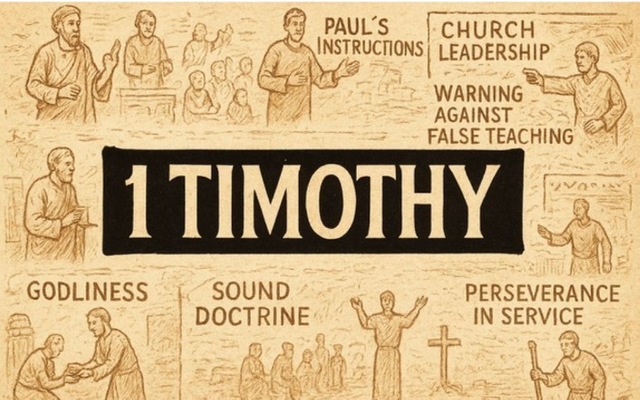
📖1 Timothy 2:1-6
Therefore, I exhort first of all that supplications, prayers, intercessions, and giving of thanks be made for all men, 2 for kings and all who are in authority, that we may lead a quiet and peaceable life in all godliness and reverence. 3 For this is good and acceptable in the sight of God our Saviour, 4 who desires all men to be saved and to come to the knowledge of the truth. 5 For there is one God and one Mediator between God and men, the Man Christ Jesus, 6 who gave Himself a ransom for all, to be testified in due time,
1. “Therefore I exhort first of all…” (v.1a)
Paul places prayer as a first priority in the life of the church, not an afterthought. The Greek phrase proton pantōn (“first of all”) signals both urgency and importance.
- The church in Ephesus, where Timothy ministered, was surrounded by political unrest, pagan worship (notably Artemis/Diana), and Roman imperial power. Paul says: Before you debate, before you strategise—pray.
- Application: The spiritual battles we face are not won in the boardroom or pulpit alone but first on our knees.
2. “Supplications, prayers, intercessions, and giving of thanks…” (v.1b)
Paul uses four distinct words for prayer, showing its richness:
- Supplications (deēseis): Specific requests made out of deep need. These are prayers of desperation, like Hannah’s cry for a child (1 Samuel 1:10–11).
- Prayers (proseuchas): A general word that emphasises worship and communion with God. It reflects intimacy—approaching God not just for needs but for a relationship.
- Intercessions (enteuxeis): Literally “to fall in with” or “to intervene.” This means standing in the gap for others (Ezekiel 22:30), pleading their case before God.
- Thanksgivings (eucharistias): Gratitude expressed for God’s goodness, even while asking. This keeps prayer from becoming a complaint list and aligns us with Philippians 4:6.
👉 Together, these words show that prayer must be varied, intentional, and holistic—covering needs, worship, advocacy, and gratitude.
3. “Be made for all men” (v.1c)
This is radical. In the first-century world, prayer was often tribal—Jews prayed for Jews, Romans for Romans, philosophers for their disciples. But Paul widens the circle: “all men.”
- God’s heart is expansive (John 3:16).
- Our prayers must move beyond our personal concerns to include humanity at large—neighbours, strangers, even enemies.
- This reflects Jesus’ teaching: “Love your enemies and pray for those who persecute you” (Matthew 5:44).
4. “For kings and all who are in authority” (v.2a)
A bold instruction! When Paul wrote this, the Roman emperor was likely Nero, infamous for cruelty and persecution of Christians. Yet Paul says: Pray for him.
- Why? Because leaders influence the lives of multitudes.
- Prayer for leaders is not agreement with their policies but an acknowledgement that God can direct their hearts (Proverbs 21:1).
- Practical Application: Pray for political stability, wisdom, justice, and for leaders to act righteously—even if they are ungodly.
5. “That we may lead a quiet and peaceable life in all godliness and reverence” (v.2b)
The goal of praying for rulers is not political power but peaceful living that allows believers to pursue godliness.
- Quiet (ēremon) – freedom from external disturbance.
- Peaceable (hēsychion) – freedom from internal turmoil.
- Godliness (eusebeia) and reverence (semnotēs) flourish when society is stable enough for the Gospel to spread unhindered.
- Application: When we pray for peace in society, we create conditions where evangelism and discipleship can thrive.
6. “For this is good and acceptable in the sight of God our Saviour” (v.3)
Praying for all and for leaders pleases God. Why? Because His heart is missional. God is not narrow or exclusive—He desires all nations, tribes, and tongues to experience salvation.
7. “Who desires all men to be saved and to come to the knowledge of the truth” (v.4)
Here, Paul reveals the heartbeat of God: salvation for all.
- The word “desires” (thelei) expresses God’s gracious will—not just tolerance, but genuine longing.
- Salvation and truth are linked—true salvation involves coming into God’s truth, not man-made philosophies.
- Cross-reference: 2 Peter 3:9 – God is not willing that any should perish but that all should come to repentance.
8. “For there is one God and one Mediator between God and men, the Man Christ Jesus” (v.5)
This is the core of Paul’s argument. Why pray for all? Because:
- There is one God—not many tribal gods, not local deities. One universal Creator over all mankind.
- There is one Mediator—Jesus Christ, fully God yet fully man. He bridges the gap sin created between humanity and God.
- He is greater than Moses (who mediated the Law) and unlike pagan priests (who offered dead sacrifices).
- Christ is the living, eternal Mediator (Hebrews 7:25).
👉 The Gospel is inclusive in scope (for all men), but exclusive in access—through one Mediator only.
9. “Who gave Himself a ransom for all, to be testified in due time” (v.6)
The word ransom (antilutron) means a substitutionary price paid for release. Jesus bought our freedom from sin, death, and satan’s grip.
- For all – His sacrifice is sufficient for the whole world.
- To be testified in due time – Salvation unfolds in history as the Gospel is proclaimed. God’s timing ensures that every generation hears the testimony of Christ crucified.
✨ The Flow of the Passage
- Priority – Prayer is first.
- Scope – Pray for all people.
- Focus – Especially for rulers and authorities.
- Goal – Peaceful lives that foster godliness.
- Reason – God desires universal salvation.
- Foundation – One God, one Mediator, one ransom.
Join our WhatsApp Channel

 Previous

CONTACT US
WhatsApp: +91 8356956746
Email: [email protected]
Address :
10/15, First Floor, Behind St. Roque Grotto, Kolivery Village, Kalina, Santacruz East, Mumbai, Maharashtra, 400098
10/15, First Floor, Behind St. Roque Grotto, Kolivery Village, Kalina, Santacruz East, Mumbai, Maharashtra, 400098






GET APP


JOIN MAILING LIST
EXPLORE
© 2026 Karuna Sadan, India.