 131
131
 92
92
 1243
1243
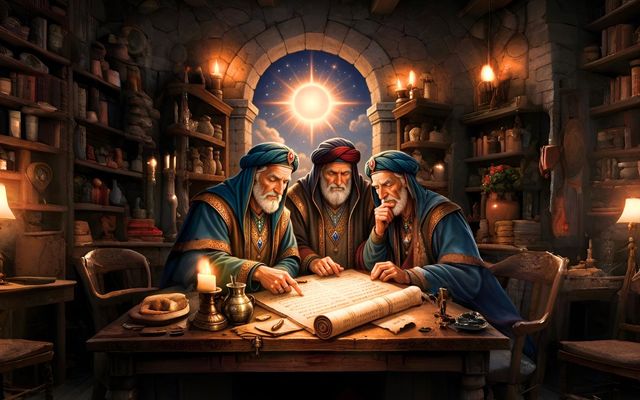
Matthew 2:1–2 tells us that after Jesus was born in Bethlehem, “wise men from the East came to Jerusalem, saying, ‘Where is He who has been born King of the Jews? For we have seen His star in the East and have come to worship Him.’”
Pause and think about that.
A group of scholars from the East likely from Persia travelled hundreds of miles to find a Jewish baby. Why would foreign intellectuals care about a Jewish prophecy?
That’s where the story becomes truly fascinating.
Who Were the Magi?
The Greek word used for “wise men” is magos. This suggests they were more than casual stargazers. They were scholars men trained in astronomy, ancient texts, and possibly even court-level advisory roles. In their culture, such men were highly respected.
Now think about Daniel.
When Daniel was taken captive to Babylon (Daniel 1), he eventually became chief over the magicians and wise men of the empire (Daniel 2:48). He wasn’t just surviving in a foreign land—he was leading in it. When Persia conquered Babylon, Daniel continued to serve under the new regime (Daniel 6).
It is entirely possible that Daniel’s writings, prophecies, and teachings were preserved in those royal archives. For generations, Persian scholars may have studied his words about a coming Messiah and a divine kingdom that would never be destroyed (Daniel 2:44; 7:13–14; 9:24–27).
Imagine these scholars poring over ancient scrolls. Then suddenly, a new and extraordinary star appears.
They connect the dots. “This is it.”
Outsiders Recognise the King
What makes this account even more striking is this: the Jewish religious leaders in Jerusalem were caught off guard. When Herod asked where the Messiah would be born, they quoted Micah 5:2 correctly but none of them went to Bethlehem to see for themselves.
- The scholars had knowledge.
- The Magi had hunger.
- The locals had proximity.
- The foreigners had pursuit.
It’s a sobering contrast.
So what was the difference? Scripture.
The apostle Paul later writes, “the sacred writings… are able to make you wise for salvation through faith in Christ Jesus” (2 Timothy 3:15). These Magi were not Jewish by birth, but they had access to prophetic truth. And they took it seriously.
- God’s Word crossed borders.
- God’s Word outlived empires.
- God’s Word created seekers.
The same writings that shaped Daniel’s life in exile eventually stirred Persian scholars to seek the Messiah. That is the power of Scripture—it does not remain trapped in one generation or culture. It speaks. It draws. It awakens.
The Takeaway
The Magi remind us that wisdom is not reserved for religious insiders. It belongs to seekers.
- They saw a sign.
- They remembered the Word.
- They took a journey.
- They worshipped.
That’s the pattern.
If you open your heart and mind to Scripture, you may begin to see what others miss. You may recognise what others overlook. True wisdom is not about information it is about revelation.
And sometimes, the ones who travel the farthest spiritually are the ones who truly see the King.
Bible Reading: Number 18-20
Listen to today’s Daily Manna Audio
Prayer
Heavenly Father, we thank You for the gift of Your Word that makes us wise unto salvation. Open our eyes, as You did for the Magi, to see the signs and wonders that lead us to Christ. May we diligently study and apply Your teachings, growing in wisdom and faith. In Jesus’ name. Amen.
Join our WhatsApp Channel

Most Read
● Distinguishing Faith from Folly● Let Judah Go Up First
● Change your Destiny
● The 7 Spirits of God
● 21 Days Fast: Day 17
● 21 Days Fast: Day #11
● The Power of Thanksgiving
Comments
CONTACT US
WhatsApp: +91 8356956746
Email: [email protected]
Address :
10/15, First Floor, Behind St. Roque Grotto, Kolivery Village, Kalina, Santacruz East, Mumbai, Maharashtra, 400098
10/15, First Floor, Behind St. Roque Grotto, Kolivery Village, Kalina, Santacruz East, Mumbai, Maharashtra, 400098






GET APP


JOIN MAILING LIST
EXPLORE
© 2026 Karuna Sadan, India.